
MEET LOUISE
Best friend with a psychology degree—adding a little humor and no interest in pretending the obvious isn't so obvious.
I'm Louise Fields, a writer, psychology graduate, relationship-pattern observer, and longtime recipient of phone calls that begin with some version of:
“Can I ask you something?”
Usually, they already know the answer.
They just want someone they trust to listen, tell them the truth, and help them figure out what to do with it.
That's pretty much what I do here.
I write about relationships, patterns, clarity, self-trust, and those wonderfully inconvenient moments when you realize you already knew—you just weren't quite ready to admit it.
I don't believe you need someone telling you how to live your life. I do believe it helps to have someone sitting beside you, saying:
“Okay. I see it, too. Now, what are we going to do about it?”

How I Got Here
I did not arrive at any of this because I mastered relationships from a textbook.
That would have been considerably cheaper than the price I paid in emotional currency.
I married young. I loved, lost, rebuilt, dated again, made some very good choices, made a few choices that were apparently necessary for character development, and eventually found the man I've now been married to for more than sixteen years.
Along the way, I started noticing something.
The people changed. The circumstances changed. The details changed.
But certain patterns didn't.
My psychology background gave me one way to understand those patterns. Living through them gave me another.
And years of listening to friends, coworkers, and family talk through their relationships taught me something else: we're often much better at recognizing the truth in someone else's life than in our own.
Sometimes we need a fresh set of eyes and ears.
Preferably attached to someone who gently tells us hard truths with love and compassion.

Why I Write
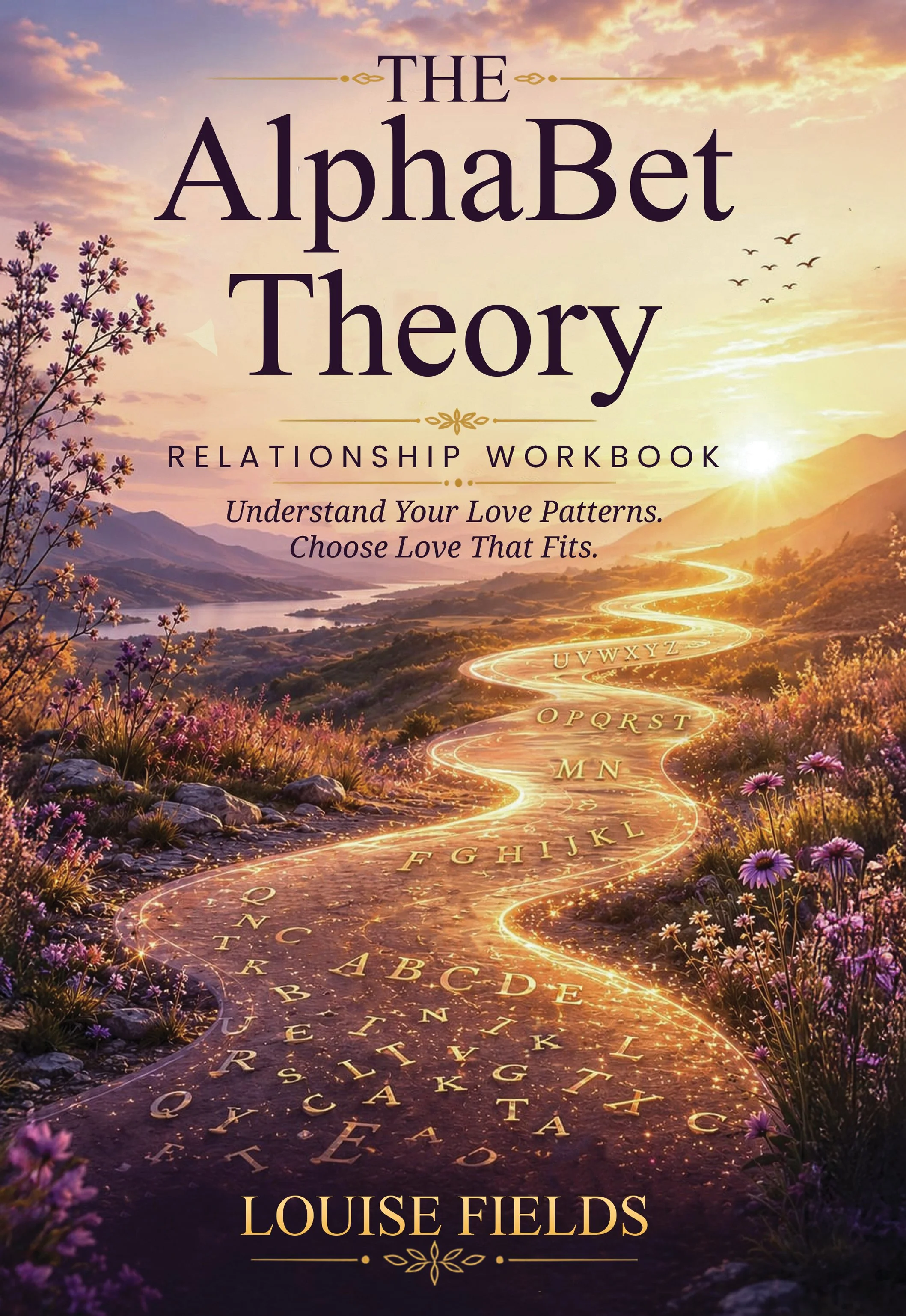
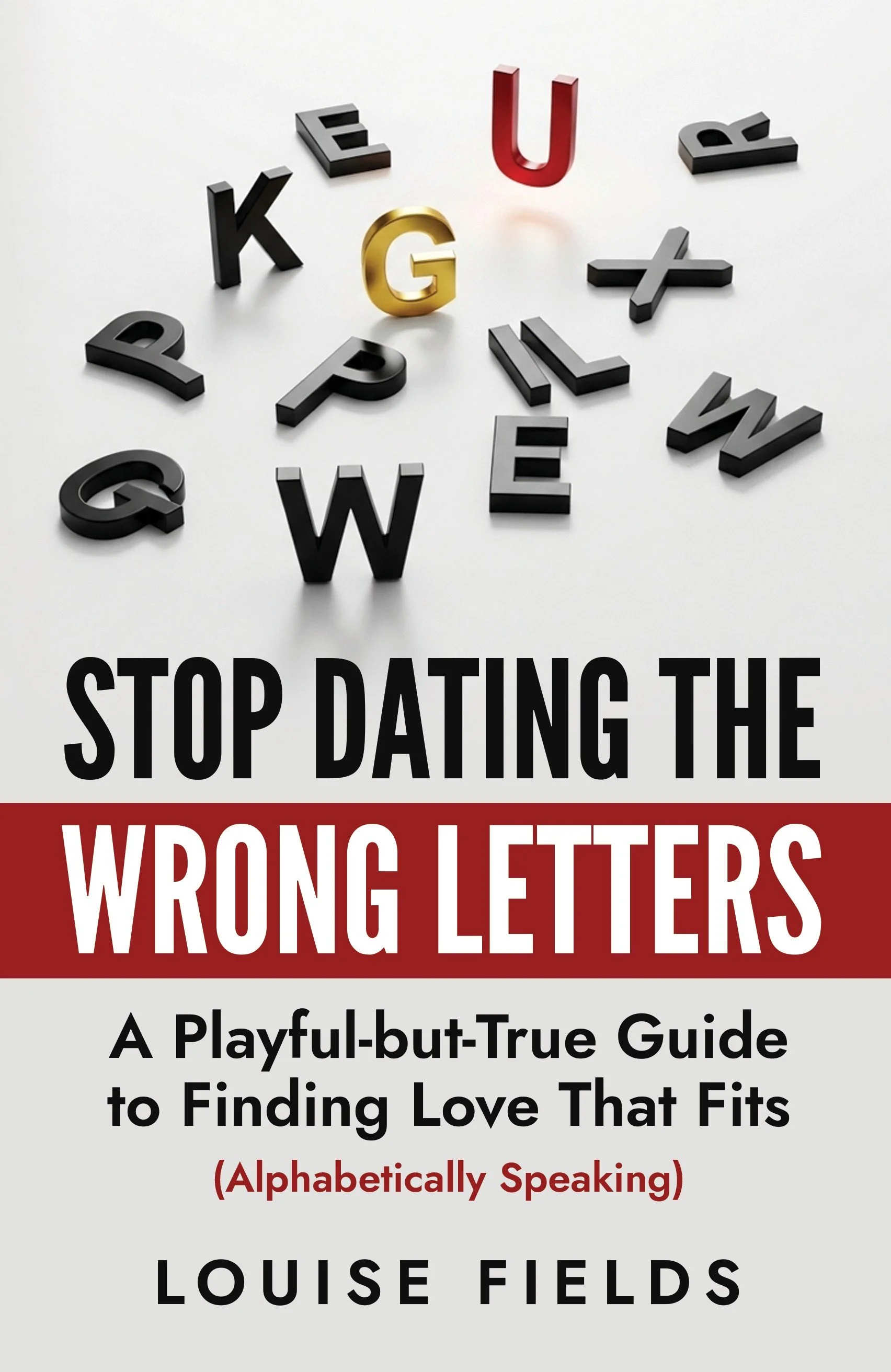
Stop Dating the Wrong Letters began as a question about relationship compatibility and eventually evolved into The AlphaBet Theory—a playful framework for examining attraction, compatibility, and the patterns we repeat.
But the more I wrote, the more I realized the conversation was bigger than dating alone.
Because patterns don't only show up in who we love.
They show up in what we tolerate.
What we avoid.
What we keep explaining away.
What we think we have to earn.
And what we already know but haven't quite trusted ourselves enough to act on.
That's why my work has expanded beyond a single book or a single theory.
Whether I'm writing about relationships, clarity, boundaries, self-trust, or simply the quirks of human nature, I'm interested in the same question:
What happens when we understand ourselves well enough to choose differently?
Sometimes that means choosing a different partner.
Sometimes it means choosing yourself.
And sometimes it means admitting you knew three red flags ago.
What You Can Expect From Me
I'm not here to hand down commandments from the mountaintop.
I've lived too much life for that.
I will listen.
I will meet you where you are.
I will offer what I know, what I've learned, and what I see—with honesty, humor, and compassion.
I won't judge your missteps; I have receipts from my life that would make that hypocritical.
But I probably won't help you pretend that something isn't happening when we both know it is.
My job isn't to make your decisions for you.
It's to help you hear yourself more clearly.
I see you.
I hear you.
Let's begin working on it together.
And sooner or later, I'm probably going to ask:
What are you going to do about it?
Own Your Story. Own Your Sh*t.
That's more than a tagline around here.
Owning your story doesn't mean loving every chapter.
It doesn't mean pretending the painful parts were secretly wonderful because they “made you stronger.” Some things were simply hard. Some choices were mistakes. Some people should have remained acquaintances.
Owning your story means being willing to look at all of it—the beautiful parts, the messy parts, the what-in-the-world-was-I-thinking parts—and recognizing that none of them get to decide what you write next.
You do.
You can learn the pattern without becoming the pattern.
You can change your mind.
You can choose differently.
You can trust yourself again.
And you don't have to have everything figured out before you start.
Your story is still yours.
Let's see what you do with the next chapter.
